Tuesday, May 5, 2020

How to Install Ceiling Insulation

How to Install Ceiling Ceiling Insulation

To the everyday person, a home would have only one ceiling: The rooftop, right? But this is not entirely true. Each room in your home has a ceiling and a floor… Even the basement and each one of those has a different insulation need in comparison with the rest of the house.

Regardless of how many rooms are there in the house, one thing is certain, there is no better place to insulate than the rooftop of the house. This is where all the warmth or coolness of the home can escape more easily. Starting from the roof down is where you ensure that you will have insulation that will render optimal energy efficiency.

However, it is important to remember that just like with any other home-based activity, you should never “plunge” into it without care nor consideration of the many things that you need to correct, or check that they are correct or to replace before insulating your ceiling. Failure to do so can hinder your effort, render you at a monetary loss as the job would have to be re-done or even risk your home to an accident because of improper insulation.

Taking the time to consider, supervise, check, and repair (when needed) will only help you develop a proper strategy and maximize your effort by cutting down on time invested and even money spent.

How To Insulate Ceilings

When you set up to insulate your home’s ceiling; there are a few things that you need to consider before thinking about taking this task on. One of such is the ceiling that your home has.

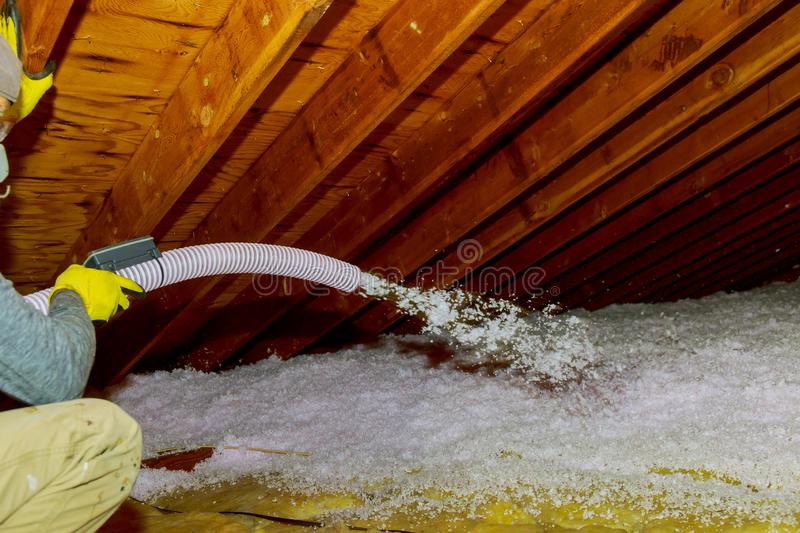
blow in insulation fiberglass
The second thing that you need to consider when deciding on insulating your home’s ceiling is the accessibility to the ceiling. As a do-it-yourself person, you most likely do not have the equipment that a contractor usually has, staying safe is–and should always be your priority.

In the USA, most homes have accessible attics whose entrance is through an interior ceiling hatch. There are other homes that have an exterior roof or entrances that are mounted in their walls. The main problem with these entrances is the size and whether they are big and wide enough to let you pass through all the materials, you will be needing.
Gable-end entries are ideal as they are one area that you need not insulate with the additional plus that–if needed, they are a great entry point for firefighters. None of us plan to get our homes burned down, but accidents happen and it is always best to be safe.

While you are reviewing and checking the access and the space you have in which to enter your insulation materials; it is now a good opportunity to check:

Obstructions
Ease of movement
Vertical clearances
The condition of the roof framing
The condition of the sheathing
How is the finish

Make sure that neither the soffit nor the fascia has signs of moisture-related problems: leaks, stains, mold, flaking, mildew, or rot.

If you find any of these areas with even the slightest problem, it is in your best interest to have them corrected before you launch into setting up or replacing the insulation, you will face a myriad of problems and all your hard work will be for nothing as the efficiency of the insulation will be 0.

In addition, you need to consider that some of these problems can cause rot in the wood that supports the attic. This could lead to even more problems and even structural ones.
If you see moisture-related problems, these can come from the outside and sift in.

Moisture can also come from inside the house in the form of vapor by air leakage. The main areas that will show this problem if this is the cause are Kitchen and Bathroom.
How can you tell for sure you have air leakage in your attic? Because you will find discoloration of the insulation. Check existing insulation so you can pinpoint and locate any air leaks. These are areas in which you will need to be extra meticulous.

Ok, but is there an ideal time to do so? Cold snaps are a perfect time. This will take the form of frost in cold climates. While this is somewhat expected, see nothing ranging between 2 inches or more.

For this check to be efficient, make sure that the ventilation is free. It should not be blocked.

If you want to check for moisture, do so during the raining season.

Replace, Remove or Add

Some experts consider that the existing insulation (if there is any) is perfect to lay new insulation over it. In this manner, you will already have “the blueprint” where to place the new insulation. This might be handy if you are a do-it-yourself kind of person.

Other consider that this is a bad idea, particularly since insulation usually is efficient for a period no longer than 8 years. It might be better to replace the whole thing.

If the insulation is decolored, damaged, brittle, or has any change in its appearance or structure, the best and safest bet is to replace it. If it is wet, you need to correct the moisture source before installing the new insulation.

Depending on the source of the moisture you might need to call a roofer or work on your roof directly. It is important that you fix and resolve the moisture or vapor problem. As even with water-repellent insulation, there might be mold or mildew if not in the insulation, it can grow in any of the other attic elements such as the wood that makes up the soul of the attic.

Things you SHOULD have when insulating your attic:

A vapor barrier on the warm side of the insulation. In previous times, this was done with paper-backed batts or even layers of paint. Nowadays the choice is a polyethylene sheet.
Air Seal the attic to prevent outside so that any vapor that can escape to the attic does not condensate and cause problems.

Weatherstrip to enhance the air sealing.

Safety notes:

With the following items, always contact your contractor or insulation specialist as they require special actions regarding attic insulation.

Metal Chimneys. Should be at least 3 inches away from contacting any insulation.
Electricity. Before working on the insulation, turn off the general power for your home or area where you will be working. It will always be advisable to stop and consult a specialist if you notice faulty or suspicious wiring.

Animal droppings. These signal three things: Wildlife nesting in your home, in which case you need to call a relocation service. Harmful vermin infesting your home, in which case you will need to determine exactly what the vermin is and call an exterminator. Finally, it might just be that there was an infestation or nesting at some point but not anymore, in which case you should try to figure out which one it was and if it was nesting, prevent it from happening.

It is also important not to remove the debris by yourself as there might have bacteria and viruses that can be harmful to human beings.

Insulating Drop Ceilings

There are homes that have two ceilings. A secondary one that is laid down below the main ceiling is known as a drop ceiling, false ceiling, or suspended ceiling. It is normally used to conceal pipes, wiring, and/or ducts.

drop ceiling
Drop ceilings are usually created to enhance or make the most out of the thermal-efficient system you have in your home. Therefore, it is important that you insulate them properly.
They are also used when there is a cathedral ceiling or when otherwise the normal building structure demands a drop ceiling to further control the temperature inside the home in a more efficient way.

There are many preferences for the way to insulate a drop ceiling and what products to use. In most cases, it usually depends on the experience of the constructor or renovator. Yet, fiberglass batt insulation is the perfect insulation for these types of ceiling. Their efficiency in insulation while being light and easy to handle and install makes them the ideal insulation for drop ceilings.

While there is some debate on whether mineral wool batts are light enough to do the job without adding too much weight to the drop ceiling structure and with the efficiency that is expected from them. It depends on what is it you expect to achieve from the insulation. For instance, fiberglass is perfect to care for the investment in climate control systems such as heating and air cooling, but mineral wool has a voice of its own for soundproofing.


Many specialists believe that insulating a drop ceiling is the easiest insulation task that a homeowner can do when they are starting on the do-it-yourself world. If you are among the homeowners that fall into this category, always consider that regardless of the insulation that you use, it is best that you use batt insulation rather than roll.

This is because the space (if any) in the drop ceiling is too short to maneuver safely. The R-value that you will need for this job depends on what you want to accomplish and the overall weather in the location where you are at.

If you are not sure what R-value you should consider, contact your insulation specialist for guidance. Once a decision has been made, it is important to check on the structure of the drop ceiling so that when you are moving it about installing the insulation, the constant movement does not cause the drop ceiling to fall down.

The way to tackle the insulation depends on you and the way the drop ceiling has been built. A traditional way states that you will take the ceiling panels down to install the insulation batt and then put them back in their original place.

This process is long and it can be tedious. A modification from this traditional method states that you process each row of panels.

· Number the panel rows: 1,2,3,…
· Remove the panel row: 2
· Work on panel row 1. Install and secure the insulation.
· Place row 2 back in its place.
· Remove panel row 3
· Repeat the process until completion.

In this process, you will still have some difficulty installing the insulation for the last row.
Regardless of which way you go, you will still need to consider things that can be a potential hazard such as electrical installations and other installations.

Insulating Cathedral Ceilings

cathedral ceiling insulation

As its name states, a vaulted ceiling has an arched structure with one or two sharp, sloping sides that together form a peak. When one of the two sides has an unequal length, it slants to the lowest wall, and this creates an illusion that it might be bigger than what it really is.

This makes slanted ceilings part of cathedral ceilings. A cathedral ceiling besides the elements already mentioned has a center point that IS higher than the walls, its sides are of an equal length that meets in the middle of a room and it gives it a unique shape.
Vaulted ceilings and cathedral ceilings might seem similar, but they are not as cathedral ceilings do not admit as much “play” as vaulted ones.

As with any other ceiling insulation, working on a cathedral insulation is the same. There are many alternatives for insulation. Many of them present problems as this ceiling has a unique shape and therefore a set of problems of its own.

Using cellulose insulation, for instance, can cause leaks as the best way to apply cellulose insulation is wet and as with any other paper, once it dries, it shrinks making it a false reading. This means that once you have installed this insulation, it will settle down and cause crevices and drafts, leaving your work to be for nothing.

In addition, and probably the most important thing: Cellulose will react badly to water and of thumb, it is not fire retardant. Cellulose can absorb a lot of water, and that will make it heavy and cause additional weight to your cathedral ceiling. If it gets wet, it will take a long time to dry out leaving plenty of room for mold and mildew.

Another alternative that is commonly used is spray foam. Also known as open or closed insulation foam; this name references to when the bubbles in the foam burst, whether it is when spraying it or after it has dried. Spray foam is expensive and sometimes, they have a heavy odor that can demand the people that live in the homes to leave for some time while the odor dissipates.

Finally, it is an insulation that admits no error. It is not insulation that the do-it-yourself homeowner can take care of. If it is not properly installed it will leave gaps that will render the whole work pointless.
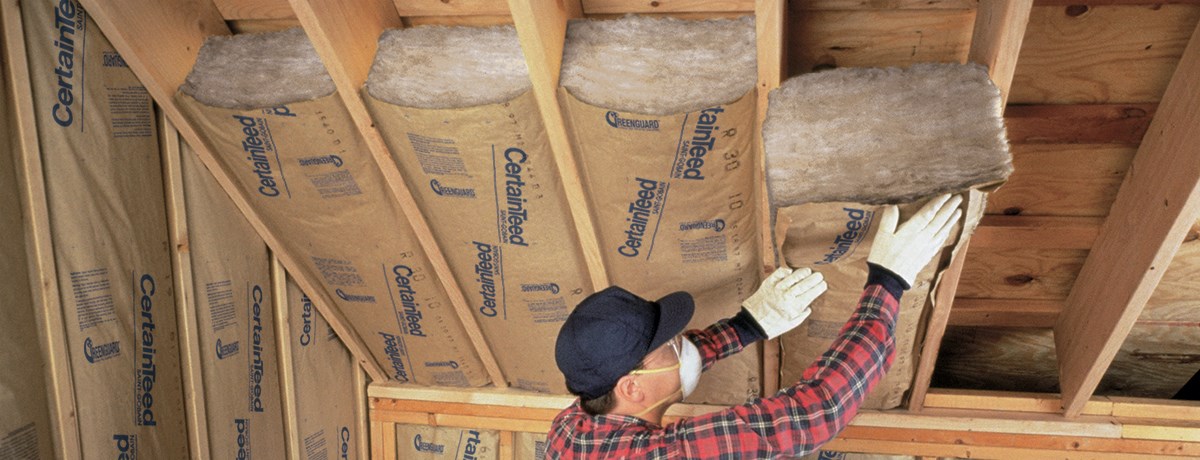

Fiberglass has an easy installation process as all it takes is for it to be stapled to the underside of the roof before hanging in place the drywall.

This is a more financially friendly option. Glass does not shrink, and it absorbs no water. It is also known to be fire retardant and since depending on the manufacturer you can find this insulation with or without backing, then you can have double-efficient insulation and install it in one process instead of going over the whole work twice.

As always, if you are not sure what type of insulation benefits your cathedral ceiling the most, reach out to your insulation specialist for guidance and consultation.

Insulating Ceilings with Attics

Not all homes have attics, some do. When your home has an attic, a question comes to mind. What to do when the ceiling of your home is the floor of the attic? Many people leave the attic un-insulated. One clear example of this attitude lies in the US classic movie: National Lampoon’s Christmas Vacation ™, in this movie, the main character played by Chevy Chase climbs up to the attic to hide some Christmas presents.

attic insulation

Since the attic is not insulated, a cold current runs through the house from the attic’s open door. His mother-in-law closes the hatch and leaves Chevy Chase “locked” in the attic. Again, since there is no insulation, he is cold and has to resort to clothes layering to keep warm.

You can see the character as he “walks about” the attic from beam to beam, trying not to step over the insulation. This is probably the best example there is for you to get convinced that it is a good idea to insulate the attic.

But why didn’t the character insulate the attic? The reason is simple, to keep your energy cost as little as possible, then you need to keep the protected volume (the area that receives the heating/cooling processes) as small as possible. And in most cases, insulating the attic can be unbalancing this structure.

However, you need to consider what use are you giving your attic? Even if you plan on using it for storage, consider the state in which the items stored there will be. An un-insulated attic can draw moisture and therefore mold and mildew that can not only damage the beams of the attic and the structure of the house but also anything you store in it.

Therefore, the best alternative is to insulate the whole area. Both the floor and the underside of the roof of the house which is the attic’s ceiling. This will keep the heated/cool area small enough to keep the energy costs low, but it will prevent any outside weather from sifting in.

Traditionally, cellulose is the insulation of choice for this, but there are many problems with it:
· It is not airtight, and it allows air to flow through, therefore it is not the perfect match to help you save money with your energy bills.
· As we have mentioned, it can absorb water and become even heavier. This could have a negative impact on the structure and stability of the ceiling.
· It is not fire retardant.

On the other size, fiberglass has some problems of its own, though despite them it is still the best alternative for the insulation of the entire attic space. As it is lightly weighted, it does not absorb water and is fire retardant

Insulating Ceilings without Attics

Insulating the under-roof of your home is a definite must if you want to use your financial resources in the best and most intelligent way.

Johns Manville R38 16 Unfaced

Johns Manville R38 16 Unfaced

Flat roofs or roofs that have no attics should be insulated from above so that a layer of rigid insulation can be added over the weatherproof layer or directly on top of the timber roof surface. In this latter case, the weatherproof layer will be applied later on top of the insulation.

If you are not building a home but renovating, it will be needed for you to remove the covering of your roof, whether you have tiles or any other covering as the process is elaborated, it should be carried out by a professional.

Not only because of the elaborated process but also so that the whole structure and the insulation itself complies with building regulations both local and federal.
Yet, there is another way which will mean to install the insulation underneath the roof. Otherwise put from inside the house; still, this process should not be carried out by a do-it-yourself.

Thursday, April 16, 2020

What you should know about EPS and XPS rigid board insulation products

What you should know about EPS and XPS rigid board insulation products

 Rigid board insulation is an insulation that comes in the form of a board.  These can be installed internally and externally to enhance thermal-insulation and can also soundproof a room.  

 One of the many advantages for the rigid board insulation is that it comes in a wide variety of presentations and it has several options so you can install them throughout your construction and have it fit perfectly.

 Here are some tidbits of information that will help you make the right choice and match your construction needs with the right rigid board insulation option.

What is Rigid Board Insulation?

Rigid board insulation or rigid panel insulation are basically the same thing.  This insulation is what you commonly see in new buildings under construction as exposed exterior insulation.

They are generally made from two types of materials.

  • Foam plastics:  polyurethane, polyisocyanurate, and polystyrene.
  • Fibrous materials (bulk materials of individual fibers): rock, slag, wool, and the well-known fiberglass.

One of the well-liked characteristics for rigid board insulation is the high R-Value that results from the raw materials that are used in the manufacturing of the rigid board insulation itself.  Since they are more effective in keeping outside air outside the proper inside temperature steady, they are more expensive than other alternatives.

In addition, it is important that rigid board insulation boards are protected from UV rays, thus they need to be kept out of the sunlight and when they are placed they must be completely covered, otherwise, they will lose their efficiency.


EPS and XPS Rigid Board Insulation  

POLYISO (Polyisocyanurate, PIR)

The raw material for the Polyiso-based rigid board insulation is polyisocyanurate.  A characteristic of this rigid board insulation are the two faces on each side; made from both organic and inorganic material.   Depending on the manufacturing company, they might include an aluminum foil facing. 

Polyiso based rigid board insulation provides several benefits that in the long run will provide you with years of efficient insulation, energy-saving, proper weather resistance, and money-saving.  Among the most important characteristics for the Polyiso based insulation you have:

  • Thermal Efficiency
  • Dimensional stability
  • Fire resistance
  • Environmental safety

This rigid board insulation is highly versatile, so it can be of use both in residential buildings and residential construction.  However, it is recommended to use it in new constructions rather than renovations. If you plan to use it in your renovation, it might require the entire area to be used to be stripped to the core.

The best way to ensure that this is the right insulation for your project is to approach your contractor or your insulation specialist. 

Rmax

EPS (Expanded Polystyrene)

One of the most commonly known materials for rigid board insulation is the EPS or “beadboard”.  EPS stands for “expanded polystyrene” which is the material from which comprehended coffee cups and other disposable picnic products in the last century.

EPS has been around humankind since the 1950s.  The EPS comes in small beads which are then expanded with air and molded in different shapes.  Here, the chosen shape is a board. This results in a lightweight, compact and efficient rigid board insulation product.

There are some misconceptions about a few benefits and characteristics of the EPS rigid board insulation and any insulation that uses EPS as the raw material. 

While EPS provides:

  • High thermal insulation
  • Water repellent
  • Dust repellent
  • High stability
  • Economical

EPS insulation

There are some misconceptions about EPS, the most important one refers to the idea that EPS is either fireproof or fire retardant.  EPS is neither. EPS succumb to fire, though it is not a fire hazard. 

For EPS to melt it needs to be exposed to high temperatures for an extended period.  As with any other material, a brief exposure to direct fire will cause scorching; but it will not cause the material to “catch fire” immediately. 

The longer the exposure to fire, the highly likely that the material will succumb and meltdown.  However, there are more risks if this were to happen, such as toxic fumes and byproducts.

It is a very good insulation material provided that you keep the integrity of the area and make sure that electrical accidents and fires are not to happen in your building or construction. 

In addition, and while EPS is water repellent, the material itself is not sealed and there are small crevices that can hold up to 1.5 drops of water which can result not in mold nor mildew but in humidity stench. 

Once the humidity stench settles in the EPS, it can be removed but it will take time and money.

XPS (Extruded Polystyrene)

XPS comes from the same original material than EPS.  The difference between the two lies in their resistance to moisture.  I have mentioned that EPS can hold a few droplets of water and that this could very well lead to humidity smell.

XPS is of common use for below-grade waterproofing and roof systems where the insulation is placed over the membrane of the roof.  This concept is not only applied to roofs but also to walls where there is a need to place insulation over the barrier membrane. 

Yet, and just like with EPS there is the misconception that this material is also fireproofed and/or fire retardant and this is neither true.  XPS comes from the same material as EPS and therefore it reacts in the same way to fire exposure.

This is important information depending on the location and way in which the rigid board insulation will be installed in your construction.  It is also important information if you are planning on renewing an existing construction.

Both rigid board insulation products are energy efficient and have strong R-values; even though the numbers and efficient rate for the XPS is higher than EPS. 

Sadly, neither are highly versatile, nor stand in their efficiency for a long period and finally, neither are environmentally friendly. 

If you are seeking for something that is environmentally friendly, neither EPS nor XPS should be your choices. 

XPS insulation

 These are the general and more commonly used materials to manufacture rigid board insulation.  However, there are more alternative and as technology advances and new engineers appear in the construction world, there are bound to be more alternatives and new and more efficient materials and products.

It would be no surprise to see a rigid board insulation product that has all the benefits and none of the disadvantages plus being 100% environmentally friendly and recyclable.

At the moment, the choices are limited even though there are many alternatives for the construction specialist and the homeowner who wants to have the best for their money’s worth AND be environmentally responsible. 

Still, there are alternatives and good rigid board insulation products from the most popular and best quality brands in the area.

FOAMULAR 150

 One of the most popular rigid board insulation products available in the market, Foamular 150, comes from the well-established insulation manufacturer Owens Corning.

 Foamular 150 raw material is XPS, which, as has been mentioned, it is also  Polystyrene. However, and unlike with some competitors where the XPS rigid board insulation can hold a droplet of water, the Foamular 150 from Owens Corning cannot as there are no small spaces between the extruded polystyrene beads.

 In addition, Foamular 150 can resist water to a point where you can even say that is water repellent!  Since it is a closed cell, there is no humidity stench that you need to worry about.

 It is one of the most versatile ones in the market so much so you can use the Foamular 150 in both residential and commercial constructions in wall furring, cavity walls, crawl spaces and sheathing to name just a few.  Your imagination and the imagination of your constructor are the limit!

 To ensure that the water resistance feature works perfectly, it is important for whoever will instal Foamular 150 to seal all the joints in a proper and efficient way. 

 Doing so will not only ensure proper functioning regarding water resistance but also will ensure that the fire retardant aspect of the Foamular 150 works adequately.

 And despite all the benefits and the–almost- incredible versatility for the Foamular; this is not a rigid board insulation that you should lie on the basement and leave exposed.

 Like any other rigid board insulation, the Foamular should be fully covered and never exposed. There are areas where the Foamular can be installed only with the covering of a thermal barrier.  For more information, contact your Owens Corning specialist.

RMAX R-Matte Plus

 From Rmax comes this alternative for those constructors and renewing specialists that seek for a different approach to rigid board insulation.  R-Matte Plus-3 has a durable white-matte reinforced aluminum facer that is non-glare. 

 The Rmax R.matte plus has been designed to be used specifically in cavity walls, masonry walls and vaulted ceilings though it is not its only use.  The versatility that has been one of the best characteristics of the Rmax products allows the R-matte plus to be used in a wide variety of other locations.

 One of the most common alternatives is building envelope continuous insulation for new buildings.  It is SO user friendly and easy to install that it is also an excellent choice for Sunday do-it-yourselves.

Besides all the advantages that the Rmax R-matte plus has to offer the homeowner or the building contractor, it is important to mention that the price of this rigid board insulation product is highly competitive, thus enhancing the appeal in terms of overall cost.

 It is important to mention as well that the Rmax R-matte plus is also moisture resistant and vapor resistant, which makes it perfect for attic insulation.  As with many other polystyrene products, the R-matte plus is also lightweight. 

Rigid board insulation

 Common Uses for Rigid Board Insulation

 Rigid board insulation is a highly versatile form of insulation whose secondary strongest characteristic is that it is light.

 At the beginning of this article, I mentioned that there are other base materials for rigid board insulation boards.  Those other materials have their own different R values. Limiting ourselves to the specific raw material of this article:  Polystyrene, this belongs to a generality of raw materials where foam has a higher R value than fiberglass, cotton or cellulose.

 This means that their performance is far better than what would be anticipated otherwise.  It is important to remember that despite the compressive strength, permeability to vapor, resistance to water itself, weight and even cost; all foam based rigid boards, raw materials come from oil.  Crude oil.

 They are not fireproofed; they will succumb to fire even if they are fire retardant or even if they have been built to withstand fire for an extended period.  Whether these rigid board insulation products produce toxic fumes when burning or not is a debatable thing. The best way is to make sure you are installing them properly and according to the manufacturer’s specifications.

 But where can you use rigid board insulation products?  The answer is that these products are so versatile that they can be installed almost anywhere.

Rigid boards are often found on the exterior side of walls; its purpose is to provide thermal insulation in a building envelope. We find them on exterior foundation walls, and often between the foundation and the roof.

Rigid boards are also suitable for installation on the exterior of studs in a framed wall or a mass wall assembly.

Products such as EPS are usually the best choice for ground contact. They can be installed against footings or back-filled foundation walls on the exterior.

Rigid board uses

For its rigid feature, rigid boards are also great for installing between sheathing and siding.

Note that these can be installed on interior walls also and are great for compact and limited spaces because of its high R-values and dense material. In the interior walls, prior to finishing, they can be seen in shapes like batts or as pre-cut pieces.

The best way to know for sure that the rigid board insulation product that you are looking to acquire will fit adequately to your needs is to consult your insulation specialist or discuss it with your construction/renovating contractor.

There definitely IS a rigid board insulation product out there to match and cover your needs.

Friday, April 3, 2020

Save Money Cutting Your Home Energy Bill

Save Money Cutting Your Home Energy Bill

Heating bills are rising up in every part of the country and the trend will continue because of World energy demands. The average US household expense on energy bills is estimated at 6% of the income in 2005, compared to 4% in 2003. Owners of efficient new houses spend considerably less than the people living in old houses. Financial burden due to increased energy expenses can be reduced by weatherizing and conserving.

Your house can be energy deficient in plumbing, insulation or heating. In many old houses, the biggest problem is not the cold air coming from windows but the air filtration from the basement due to floor joists and the structures supporting the floor. In an average American home, 50%-70% of the energy used goes to heating and cooling. If your house is built before 1980, it may no have adequate insulation. While most owners focus on attic insulation, they should not ignore the basement ceiling. Fiber glass is not a good insulation material as air flows right through it. Use spray foam or cellulose as an insulation materials for proper insulation.

Insulate your home

Caulk and weather-strip all doors and windows that leak air. Look for all plumbing, ducting and electrical wiring the penetrates through exterior walls and seal those to prevent hot air leaking out. Keep the flue damper tightly closed when the fire place is not in use. If you are planning to change windows in your house, shop for insulating windows and install them as tight fitting as possible. You can use heavy duty clear plastic sheet to the inside of your window and seal them properly to prevent any leak. Make sure home is properly insulated with R30 or R 38 insulation in the ceiling and R13- R 21 insulation in the walls. 

Upgrade your thermostat to a smart Thermostat

Another areas where home owners can focus to reduce their energy bill is conservation. If you have an old thermostat, replace it with a new electronics control thermostat with digital readouts.. An electronics control thermostat is more precise than an dial type thermostat. Better, yet, is a programmable thermostat that you can program for the different hours of the day and night. Replace air filters regularly. If your house has a hot water radiator, bleed it once or twice during the winter season. If you don’t know how to do this, search in the Internet or get the help of a professional. Install a Nest thermostat. 

Upgrade appliances

When you buy new appliances, look for the “Energy Star label. Energy Star labeled appliances are certified to be energy efficient. Most appliances now display a bright yellow and black Energy Guide label. These labels will tell you the average energy consumption cost of the appliance. While shopping for any appliance, do not forget to take into account this cost as another factor to evaluate before you make your final decision. You can find more energy tips at http://www.eere.energy.gov/consumer/tips.


Monday, March 30, 2020

Insulation Buying Tips

Basic Insulation Buying Tips

Insulation is the process of enclosing or covering an object with a material that serves as a barrier and reduces (or blocks) the flow of energy, specifically heat. It is essentially used for the following reasons:

-To reduce heat energy losses.

-To prevent nearby objects from heating up.

Below are some examples where insulation is typically used:

-On appliances - stoves and ovens, refrigerators and freezers, water heaters, water pipes, etc.

-On industrial applications.

When done properly, insulation can provide indoor comfort (by keeping your house cooler in the summer and warmer in the winter) and energy efficiency.

Determining and buying the insulation that is right for your household can be a challenge. Below are some helpful hints on how to go about buying the perfect insulation for your home.

#1 What to insulate.

The first thing to consider is to identify where the insulation will be installed or used. A personal inspection of your home may be sufficient, but it is still best to let the qualified people (such as your contractor) do the job.

Depending on your (or an expert's) findings, your household might need any or all of the following insulation:

-Wall/cavity wall insulation. Cavity wall insulation prevents your house from being exposed to rapid temperature changes outside. Studies show that heat loss due to un-insulated walls can reach as much as 50%, and cavity wall insulation could possibly prevent 70% of this from happening.

-Loft/roof insulation. Because hot air rises, heat loss through the roof can reach as much as 25%. This can be greatly reduced with proper attic or loft insulation.

-Duct/pipe insulation. Leaky ducts or pipes can contribute to an increase in your heating (or cooling) costs. They can also burst (or freeze), so it is also important to have them properly insulated.

-Water cylinders/storage tanks. Hot water cylinders and cold water storage tanks also need to be insulated event them from being exposed to intense cold or heat.

#2 What to Use to Insulate

Traditional insulating materials that are commonly-used in the households are the following:

Fiberglass/fiberglass mats/mineral fiber. Fiberglass is the most common and versatile type of insulating material that is made from molten glass and spun into microfibers.

Usually pink or yellow in color, fiberglass comes in 3 forms:

  • Rolls - blankets of insulation that may or may not have vapor barriers, which prevent condensation in cold areas that could result in damage (such as mold).Owens Attic insulation
  • Batts - similar to rolls but come in lengths ranging from 4 to 8 feet.
  •  Blown- these are loose insulation that can be 'blown' into walls or ceilings.

loose fill fiberglass


Cellulose Insulation

Another insulating material that is commonly used in households is cellulose. It is a fibrous material made from scrap or recycled paper (like newsprint or cardboard) that is shredded and treated with chemicals that would make it resistant to fire and insects. It is then applied (poured or blown-in) into place, either as loose-fill or wet-sprayed with the use of a machine.

Rock wool

As the name implies, rock wool is an insulating material that is made from rock. Manufactured similarly to that of a fiberglass (with molten rock replacing glass), rock wool can be in the form of a hollow brick or a porous concrete block.

Unfaced


Synthetic insulation

Synthetic insulating materials are manufactured in several forms, some of which are the following:

Polystyrene foam - usually as rigid, pre-cut boards.

Polyurethane foam - usually as boards or foamed 'insitu' ("in position").

Spray-on expanding foam - similar to that found in aerosol cans, it can completey seal and insulate even the smallest areas in the house by 'poofing' up to as much as 2 to 4 times the original size when applied.

Deciding on the right material to be used for installation largely depends on the area that requires installation. Below are some of the standard insulating materials that are recommended for the specific areas in your home:

For loft or roof insulation

  • Mineral wool quilt
  • Blown mineral wool
  • Blown cellulose fibre

For duct or pipe insulation

  • Mineral wool mat
  • Pre-formed split foam insulation
  • Foil-faced fiberglass insulation
  • Vinyl-faced insulation
  • Ridged foam insulation

For wall insulation

  • Blown-in cellulose
  • Fiberglass (batt and roll) insulation

#3 Check with an expert

Aside from your personal considerations, the key to finding the perfect insulation for your home is to consult a professional who is knowledgeable in this field. It is still best to check with an expert, who could provide you with several options that would best suit your needs.

Insulating your home may add to your household expenses today, but in the long run, it will not only save you money (by lowering your utility bills); it will also protect you and your property.

Pacific Insulation

Friday, March 27, 2020

Attic Insulation helps with cooling

Attic Insulation Helps with Cooling

Attic insulation is designed to keep heat in your home in the winter and out of your home in the summer. Heat rises and, in the winter, any air that is heated by your furnace goes up – and out through your attic. In the summer, your roof becomes very hot and, with no place for the hot air to go, your attic can become the hottest space in your home. Without attic insulation, that heat would quickly get into your home.

Owens Attic insulation

So attic insulation is probably the most important insulation in your home. The type of insulation you choose is also important because they are not all created equal.

Fibreglass batt insulation is probably the most popular type of insulation for attics. It is easily installed by homeowners and it fits perfectly between the joists of your ceiling. Installers need to be careful to make sure that the batts fit every crevice and corner snugly or a lot heat will get through the gaps.

Johns Manville R38 16 Unfaced

Johns Manville R38 16 Unfaced

Moisture in your attic will reduce the degree of insulation you get from fibreglass batts. Any leaks, condensation problems or other sources of moisture must be fixed before installing batt insulation.

Loose-fill fibreglass and cellulose is another popular type of insulation for attics. Spread by hand or with a blower, loose-fill insulation can be blown into corners and hard to reach areas, so there is less of a problem with “gaps”. However, moisture also damages the fibreglass and cellulose in loose fill and you must fix all moisture problems before installation.

loose fill fiberglass

Spray foam is an increasingly popular type of insulation for attic applications. Not only does it get into hard to reach places, it expands to fill every gap and hole, so heat can’t pass through spaces in the insulation.

Spray foam is also waterproof and often, because it expands, it will stop small moisture leaks. Condensation isn’t a problem because of how well spray foam seals your attic.

Other spray foam benefits include support for the structure of your house, fewer airborne pollution and irritants in your home, and less outside noise.

Attic Insulation has a Tough Job

Attic insulation is designed to keep heat in your home in the winter and out of your home in the summer. Heat rises and, in the winter, any air that is heated by your furnace goes up – and out through your attic. In the summer, your roof becomes very hot and, with no place for the hot air to go, your attic can become the hottest space in your home. Without attic insulation, that heat would quickly get into your home.


Monday, March 23, 2020

Alternatives to Fiberglass Insulation

When building a home, insulation is one of the major aspects that can cut future heating and cooling costs. Fiberglass insulation has been the primary choice, but not anymore.

Alternatives to Fiberglass Insulation

People have become much more sensitive to environmental and energy savings issues when building homes. Whereas such subjects were rarely discussed 20 years ago, they are now on the front burner for many of us. This transition has been so extensive that homebuilders now incorporate both issues in their projects and use their solutions as selling points. If these subjects have become part of the marketing, you know the transition to more environmental and energy consciousness has come full circle.

Have you ever wondered what happens to the newspapers you haul out to curb with the other recycling every week? Since I am mentioning it in this article, it is probably obvious the newspapers are being turned into insulation products. This relatively new insulation product is quickly overtaking fiberglass insulation in new home building projects, remodels and additions. Known as fiber insulation, it is more environmentally friendly than fiberglass, less expensive and just as good at sealing homes.

Fiber insulation is typically made up of recycled newspapers. Yes, those newspapers you haul out to the curb each week with the trash. Small amounts of ground up cardboard can also be included in some products. The material is shredded and then treated with acrylic binders to make the material hold together. To prevent fires, it is treated with various forms of fire retardant materials.

Fiber insulation almost always comes in a loose fill form. The loose fill is typically blown into cavities requiring insulation instead of being stapled up as seen with traditional fiberglass rolls. The material usually goes in dry, but there are wet versions that are sprayed on much like more traditional spray on insulation products.

As you may know, recycling newspaper is something everyone does these days. Just take a look down the street on garbage day. Recycle boxes of newspapers are on every driveway. This massive recycling produces tons of shredded newspaper material. Frankly, it can’t be turned into usable materials fast enough. This inventory problem means the material is extremely cheap. As a result, fiber insulation can cost up to 25 percent cheaper than fiberglass insulation.

Whether you are building new, doing an improvement or just adding on, fiber insulation represents a good deal on all fronts. Just tell them you want the stuff made out of recycled newspapers.

At Pacific Material we sell Celluose insulation at all 70 of our locations nationwide


Tuesday, March 17, 2020

Does Insulating my Floor really help?

The ins and outs of insulating your floors

floor insulation

We often think of insulating the walls or insulating roof spaces, but insulating the floor is also of paramount importance. The cold feeling you have when walking on the floor is certainly very real and a sign that this stage has been forgotten. To avoid repeating this kind of error or to remedy it, here are some tips that it is better to have consulted before and will avoid further setbacks in the course of insulating the floor.

Why Insulate the Floor?

Insulating a floor is therefore important, but before knowing how to do it, you need to know what you will gain from it. And it is also necessary to define what is your priority, thermal insulation or sound insulation?

From a thermal point of view, we know that the energy losses due to the ground are 10%, so it is easy to calculate the achievable savings and to know how long it will take to pay off your work.

For example, the insulation price for a typical house of 100 m², with 15 m² of glass surfaces and heating for more than 15 years is established at:

from 2,000 to 4,000 $ in case of insulation of a pavilion with basement;

from 3,000 to 5,000 $ if low floor insulation on the median or on crawl space not accessible.

It was also calculated that the annual energy saving was then $124 in the case of gas heating, $ 167 for electric heating and $ 183 in the case of oil heating.

If we consider an expenditure of $ 3,000 and aid of around 30%, we see that it takes 10 to 15 years to amortize this expenditure and that, over 20 years, for example, you have gained 'money. But, above all, you will greatly benefit in terms of comfort.

How to Choose your Floor Insulation

The choice of insulation material is majorly based on its thermal properties: the coefficient R. It indicates the thermal resistance of the material. The higher the thermal resistance, the more efficient the insulation. To effectively insulate your floor, we recommend an insulation with a thermal resistance equal to or greater than 3 m².K / W (R ≥ 3 m².K / W).

The other element to take into account in the choice of insulation is its conductivity, that is to say its ability to transport heat. It is measured per m² in degrees Celsius and per Watt (m². ° C / W). This will result in the thickness necessary to obtain the desired performance.

Finally, when applying the coating directly to the insulation, check the compressive strength. It is this which determines the maximum crushing that the insulation can withstand. After this threshold, the material settles and loses its insulation capacity. Compressive strength is calculated in kilopascals (kPa). These insulating materials are delivered in bulk or in the form of rolls but most often in sheets.

To make the right choice of insulation technique, you will also have to take into account the climate of your region and the characteristics of your floor.

Other elements will have to be taken into account in the choice of your insulation. The destination of the room is important. So, if you are installing a water room (bathroom, toilet, kitchen) you will need to provide moisture-resistant insulation, because in the event of an incident such as water leak, you will have to review all of your insulation and the finishes that go with it!

Also, the choice of coating can also influence that of the insulation. Indeed, some materials already have interesting thermal performances, such as carpets, plant fibers, parquet floors or certain vinyl coverings.

Other coatings require very meticulous floor preparation for a completely flat surface. Tiling, waxed concrete or laminate will therefore be reserved for more circulating rooms such as bedrooms or living room.

Floor insulation methods

To build a good quality insulated floor, you have to use the right method and choose the right insulation material. Here is an overview of the most common floor insulation method:

Layer 1 - Concrete slab: a reinforced concrete slab at least 10 centimeters thick is the essential basis for good quality floor. This prevents moisture from entering the soil, strengthens its stability and prevents pests from eating away at the insulation layer.

Layer 2 - Protective cover and insulation: the protective cover is placed directly on the concrete. It provides additional protection against steam. Then put the insulation on the tarpaulin. To seal the edges of it, insulating strips are used.

Layer 3 - Pipes and screed: above the insulation layer, you can install the pipes for central heating or a heated floor. Once the pipes are installed, the assembly can be completed by applying a screed at least 8 cm thick.

Layer 4 - Finishing: put the floor covering of your choice on the screed.

How to go about insulating floors

The first step is to make the floor perfectly level by updating it. On a concrete surface, start by deburring the underside of your floor using a grinder and a new deburring disc. If the surface has holes, fill them with cement. Wait for complete drying before installing the insulation. If the surface is not completely flat, a leveling off the floor (2) with a plaster must be used.

On loose floor, such as clay, the ideal is to successively apply a layer of sand and / or gravel and then a thin waterproofing film before installing the insulation panels. Finally, before tackling the finish, it is advisable to fix a vapor barrier and possibly a reinforced concrete slab or a dry screed if the coating requires it.

Depending on the choice of floor covering, the insulation can be left bare or covered with a finish (plates or coating) depending on whether it is visible or not, or whether or not it requires protection against mechanical attack, for example.

Note: To limit thermal bridges, here are some tips:

• the insulating panels must be joined, placed continuously and applied against the floor;

• also insulate corner walls and floor supports to treat thermal bridges.

• Take the time to study all the elements necessary for your choice before you buy materials: the local climate, the base of the floor, the insulation in place, the destination of the room, the type of coating, the type of heating.